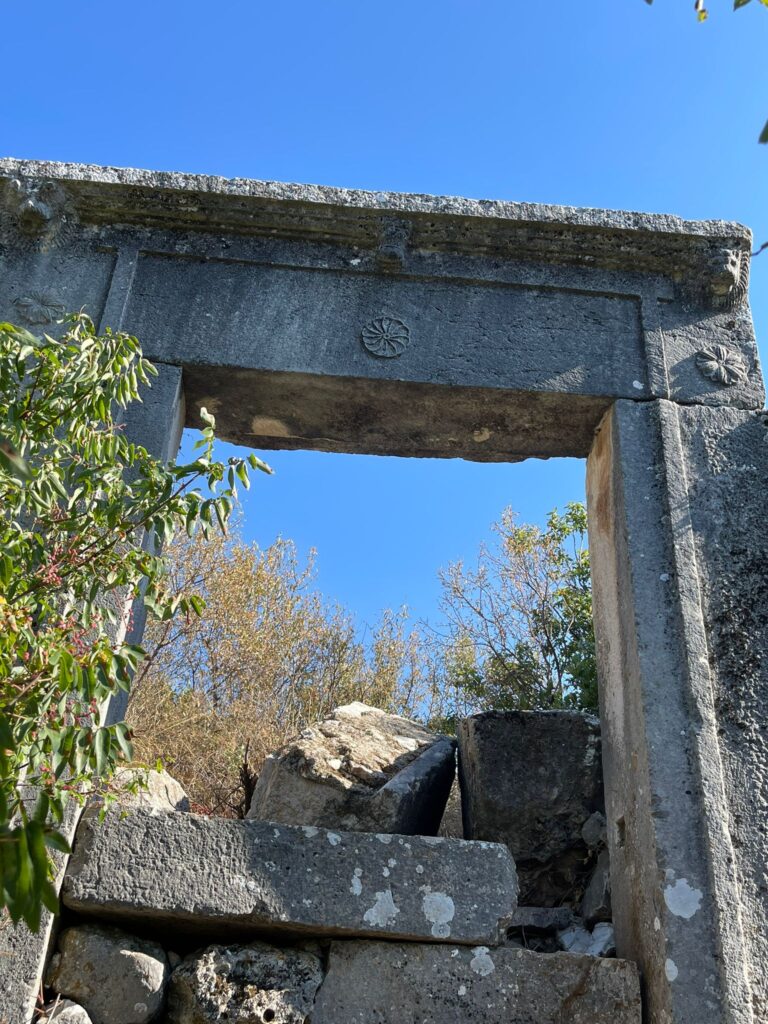

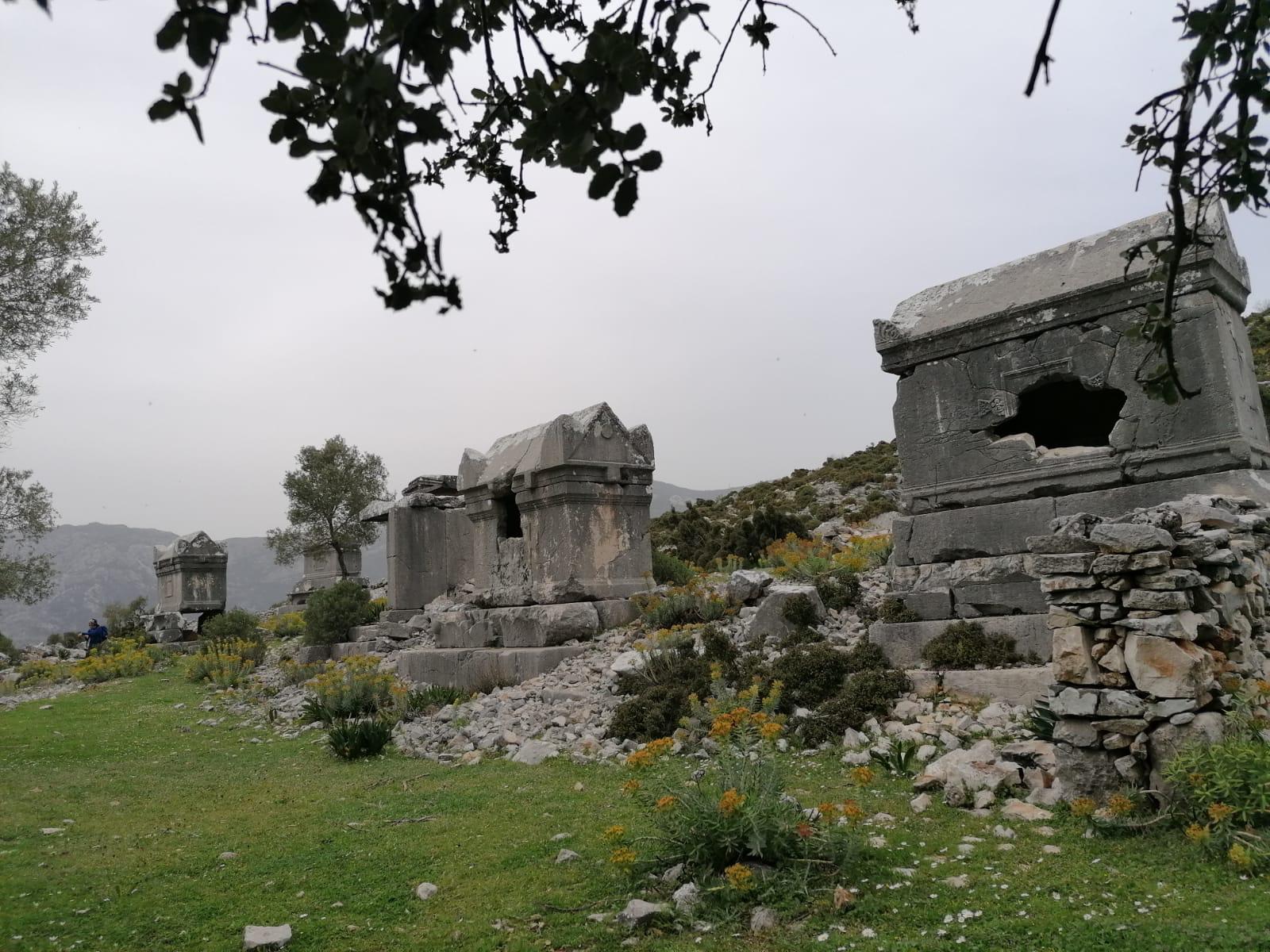
Sidyma Ancient City, located on the Lycian Way, is one of the two most important cities nestled between Patara and Fethiye in the Yedi Burunlar region, known as Babadağ mountain range. This ancient city is intertwined with Dodurga Village in the Seydikemer district.
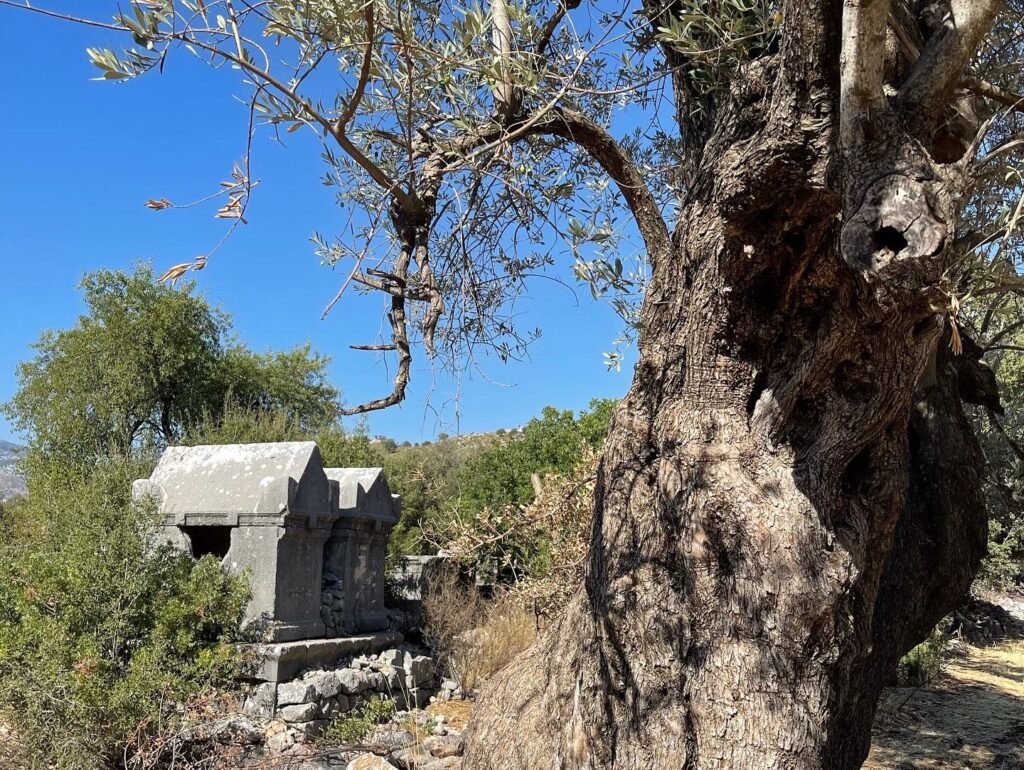
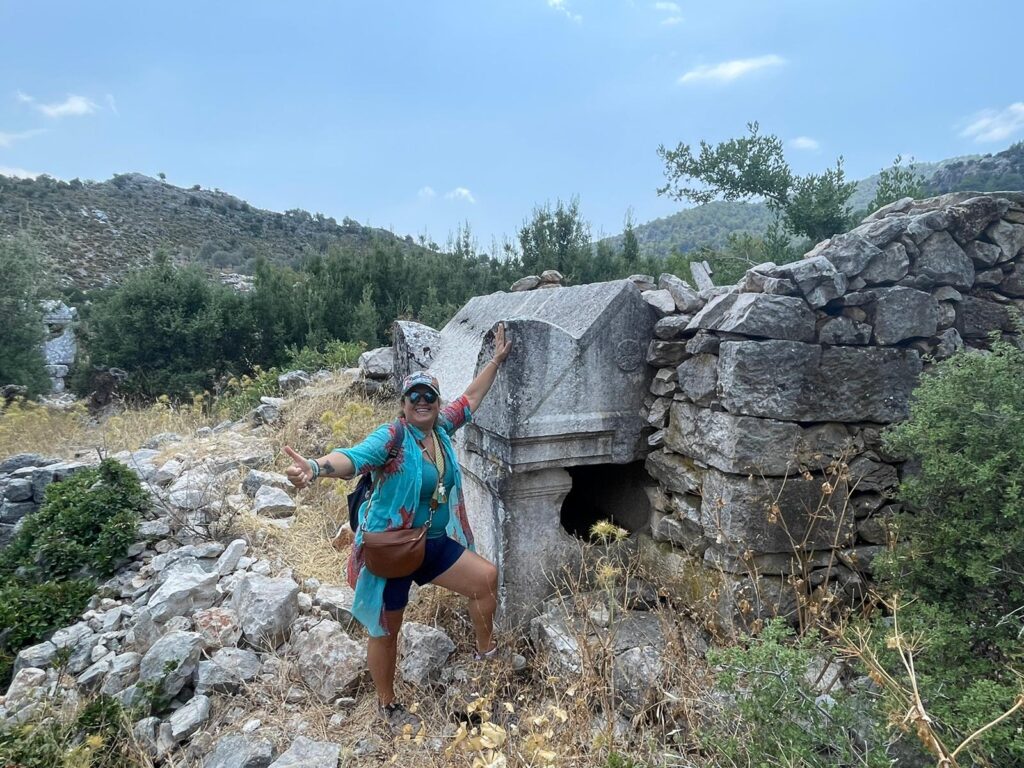
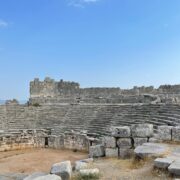
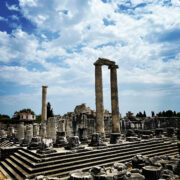
The remains of Sidyma Ancient City that have reached our time date back to the Roman period. When we examine inscriptions and coins among these remains, it becomes apparent that they date back to before the 1st century BC. The city continued to develop during the Roman period, and this trend persisted in the Byzantine era as well. Sidyma’s acropolis is located on a two-part hill north of Dodurga Neighborhood. There is an observation tower in the east and a theater believed to have been built in a later period. The remnants on the north slope of the acropolis are likely Lykian tomb monuments. Additionally, there are several monumental royal tombs in the region. The well-preserved Stoa in the middle of the village, with its columns still standing, was built during the reign of Emperor Claudius (AD 41-54). Next to it is the 9-meter-long Artemis Temple, which also belongs to the same period.
According to mythology, a soldier named Mercian, who participated in a war, falls ill one day and, being helpless, stays in Sidyma. Two brothers living in the region help him recover, and a friendship develops among them. After Mercian recovers, he goes hunting with his friends one day. They lie down to rest under the midday sun, and while his friends are sleeping, they see a large eagle spreading its wings in the air to provide shade. This event is interpreted as a sign that Mercian will become an emperor one day. Mercian doesn’t believe in such a thing, saying it’s impossible, but he promises his friends that if such a thing really happens one day, he will make them important figures in the city. Years later, after the death of the second Theodosius, Mercian ascends to the throne and keeps his promise by appointing his friends to the highest positions in Lycia.
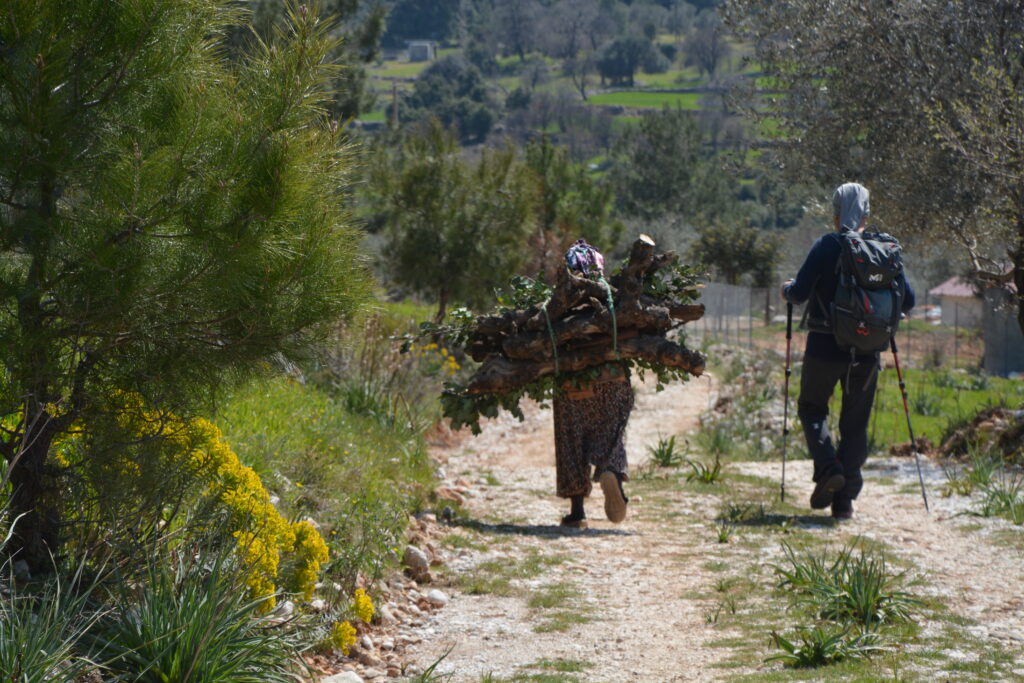
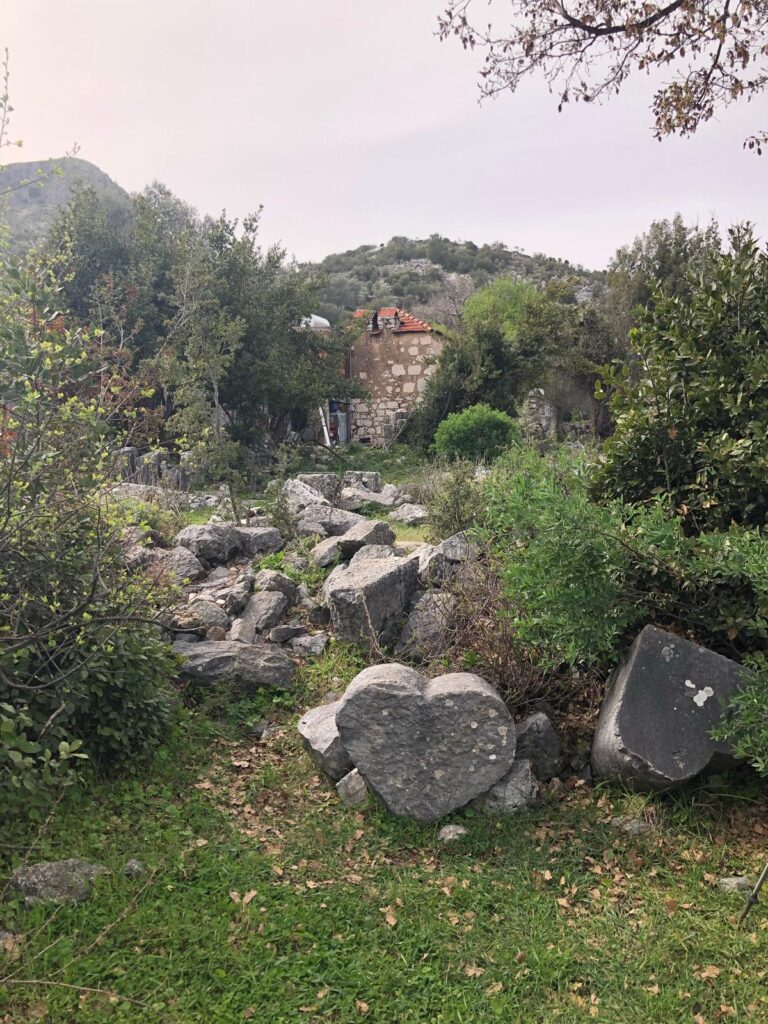
People in this village are living in harmony with history, and this undoubtedly holds profound significance. The villagers who currently live there still use the 2000-year-old tombs, cisterns, and walls. These people, who build their homes with stones collected from the ruins of the ancient city, are experiencing an esoteric experience of which they may not be entirely aware.
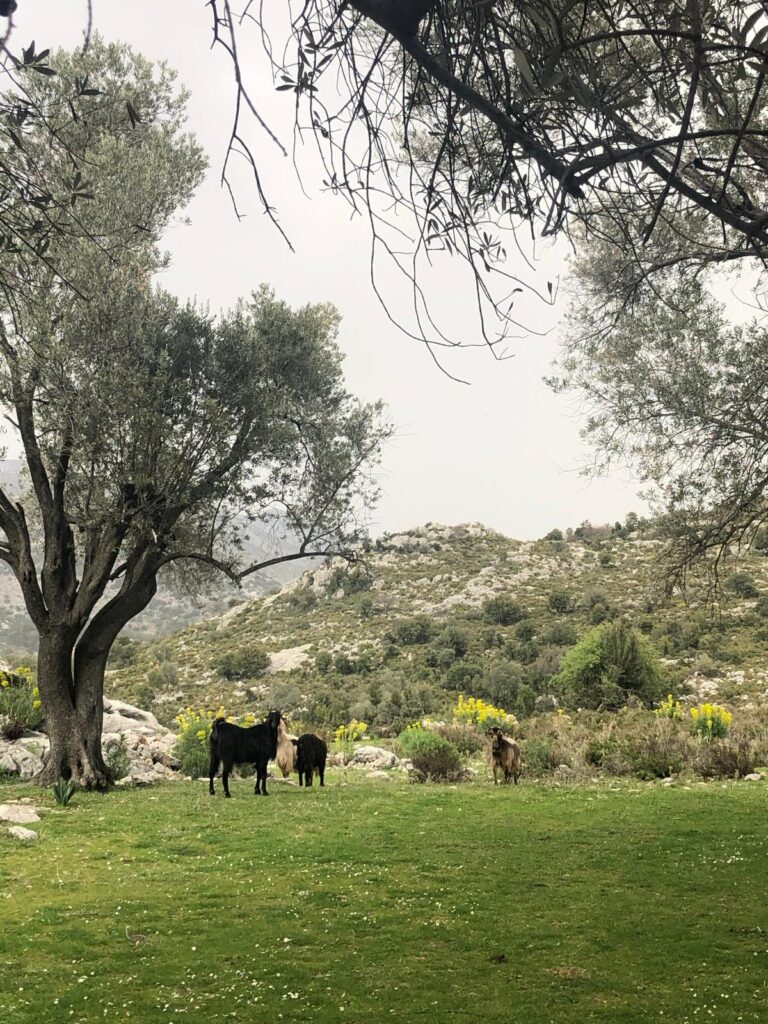
On the necropolis side, the villagers have been engaged in agriculture for many years. Existing olive groves and laurel leaves have become a source of livelihood for the villagers. From a tourism perspective, Sidyma provides an additional source of income for the villagers as it is located on the Lycian Way.
One of our goals at Lukka Life is to support the productive women of the region. With our trips and projects, we aim to help their efforts reach more people. With this perspective, in many of our programs, we have our meals, drink our tea, and purchase handwoven items in this village to do our best for our goal.
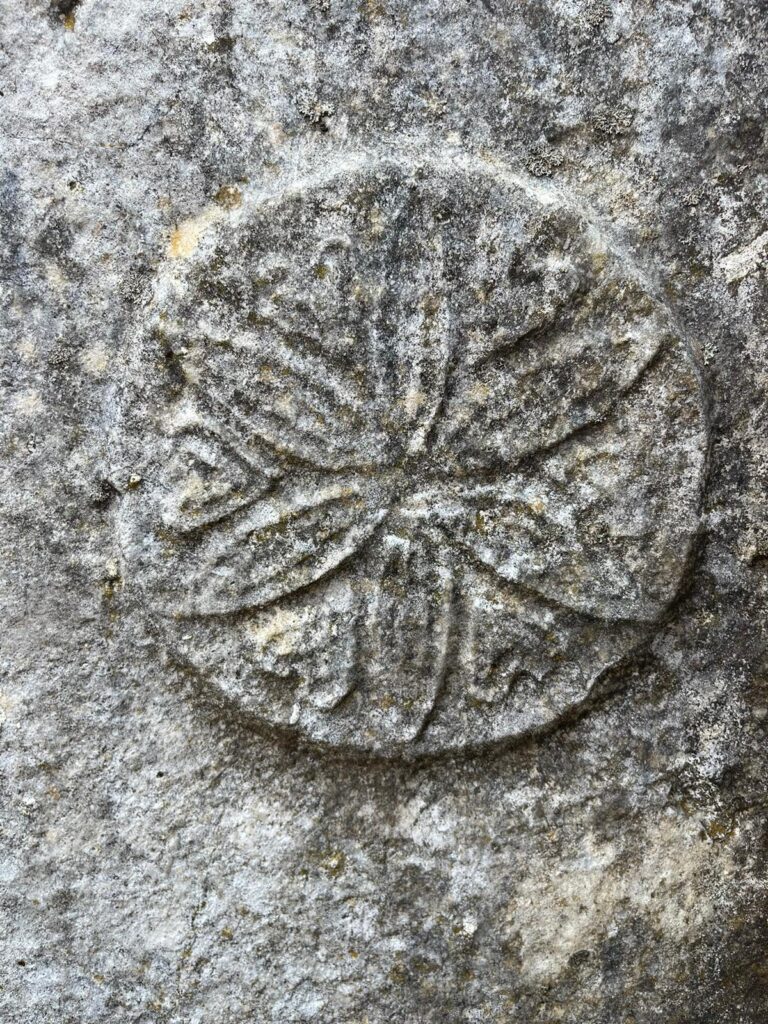
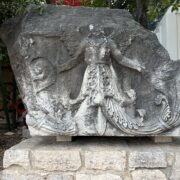
Sidyma Ancient City holds a special meaning for Lukka Life because our project was born from an exploration journey here. Moreover, a symbol on a tombstone we encountered in this city inspired the shaping of our logo.