

Ephesus – Artemis Of Ephesus – Virgin Mary
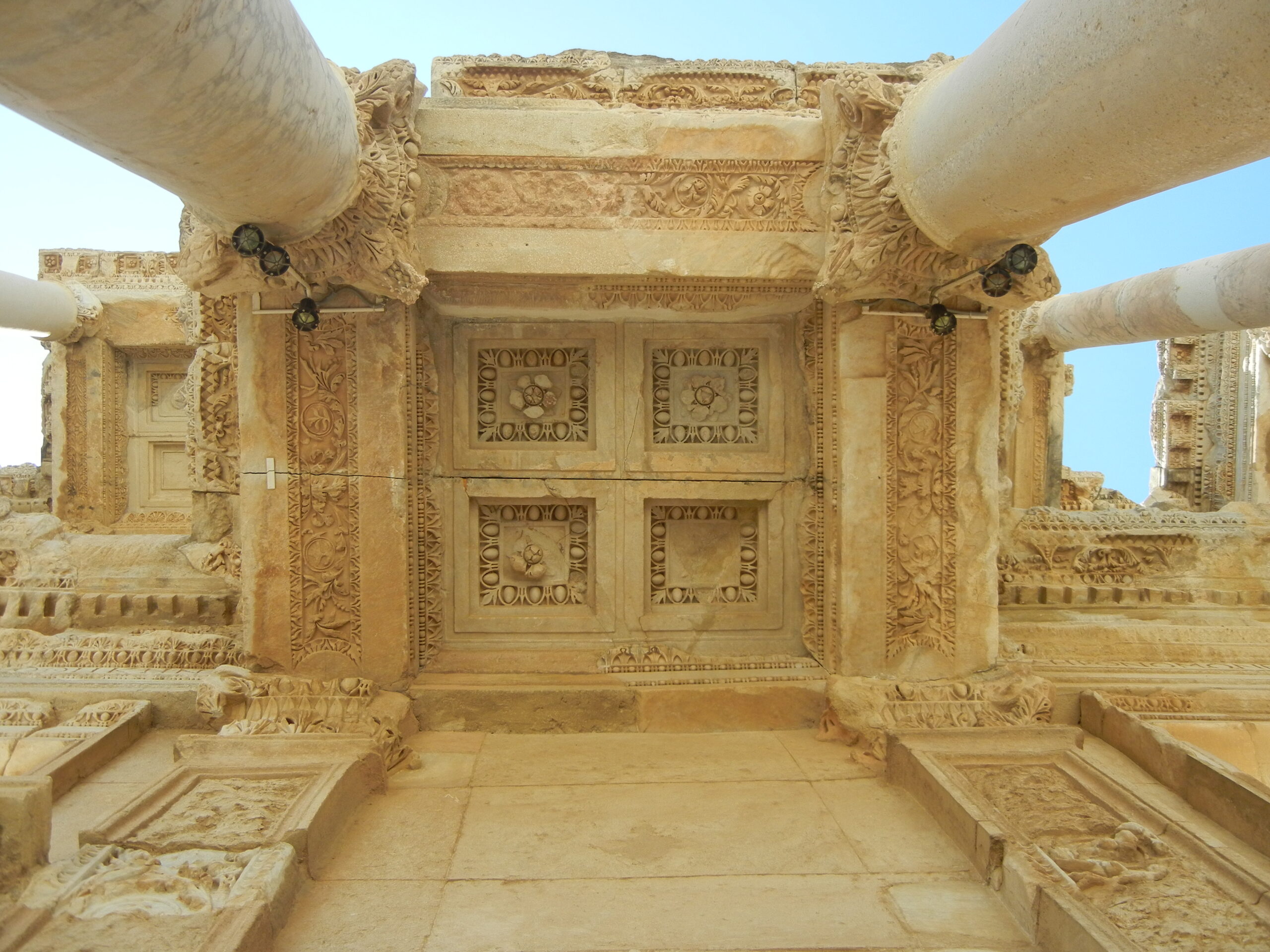
Ephesus, one of the most important ancient cities in the Ionian region, situated along the coast of the Aegean Sea, encompassing the present-day western parts of Izmir and Aydın provinces, including the Greek islands of Chios and Samos. It was located between the southern and western slopes of Mount Prion (Panayır) and the northern slopes of Mount Koressos (Bülbül) and served as a significant port city. It thrived as a trading center and became the capital of the province of Asia during the Roman period.
The ancient city of Ephesus, within the boundaries of Selçuk district in Izmir Province, dates back to around 6000 BC. Excavations have revealed settlements from the Bronze Ages and Hittite presence in the area, particularly at the mounds around Ephesus and Ayasuluk Hill, where the castle is located. The Ephesus we know as an ancient archaeological site today was founded around 300 BC.
Ephesus and Smyrna (Izmir) are said to have been founded by fierce warrior women called the Amazons. These warrior women have been associated with Ephesian Artemis in the verses of some poets. While there is some debate about the birthplace of Ephesian Artemis, the people of Ephesus believed she was born in the Ortygia grove near the Kenkhrios River, which is close to Ephesus. The Kenkhrios River is the water source for the village of Kırkınca (known today as Şirince).
In various sources, Goddess Artemis was worshipped under different titles, each with its own unique characteristics. For instance, the Greeks categorized Artemis into four groups: Arkadian Artemis, Ephesian Artemis, Brauronian Artemis, and also known as Selene-Artemis. The classical Artemis in Greece was depicted as a highly Olympic figure, a hunter with a short skirt, entangled in her father’s and Apollo’s words. Ephesian Artemis, on the other hand, is significantly different in terms of the history of religions.
One reason for the worship of Goddess Artemis in Ephesus is the existence of an ancient Mother Goddess cult in Anatolia dating back to the Neolithic Age, approximately 10,000 years ago. This belief, which equated the fertility of the earth with the fertility of women, later transformed into the cult of Cybele and then passed on to Ephesian Artemis, and subsequently continued with the cult of Virgin Mary.
Ephesian Artemis, who could also be referred to as ‘Diana of Ephesus’ in the context of Greek mythology, is an extremely ancient Asian goddess, often called ‘Metra’ in her original name (also known as ‘Anaitis-Aphroditis’). In this context, Metra is a two-fold goddess, representing all-encompassing love in one phase and the light of the heavens in the other. Ephesian Artemis is described with numerous attributes in hundreds of inscriptions, such as founder, savior, commander, guide, invincible, powerful, wise, convincing, listener and answerer of prayers, accepting, free, lawgiver, queen, great, glorious, radiant, ruler of destiny, invulnerable, ever-present, and ever-ready.
The most definite divine personality that carries on the legacy of Artemis is undoubtedly the Virgin Mary. In their cultural evolution, the Ephesians provided a remarkable example of transposition – when they were forbidden to worship the Great Goddess they believed in, and subjected to unimaginable torture and persecution due to their beliefs, they were presented with a divine being named Mary and forcibly imposed her with all the qualities of Artemis. Thus, they not only preserved the essence of their beliefs but also elevated Virgin Mary as a being in the world with the qualities of a great goddess.
The House of the Virgin Mary, located 7 km from Selçuk, is a Catholic shrine situated on Mount Bülbüldağı near Ephesus. It is known that St. John brought Virgin Mary to Ephesus around 4 to 6 years after the death of Jesus. While the Catholic Church has not definitively confirmed that the house indeed belonged to Virgin Mary, it has been receiving regular pilgrimages since its discovery. Every year, on August 15th, ceremonies are held, drawing significant interest.
References:
Kathryn Petras and Ross Petras, Mythology Tales & Legends of the Gods, Fandex Family Field Guides, Workman Publishing, Mexico, 1998: 13-14.
Pierre Grimal, The Concise Dictionary of Classical Mythology, Editor: Stephen Kershaw, Translator: A.R. Maxwell-Hyslop, Basil Blackwell, Great Britain, 1990: 60-61.
Şefik Can, Klasik Yunan Mitolojisi, 6th Edition, İnkılap Yayınevi, Istanbul, 1970: 18-19, 66-73.
Mitoloji, Editor: Mustafa Alp Dağıstanlı, Translator: Nurettin Elhüseyni, Başvuru Kitapları Serisi, NTV Yayınları, China, 2009: 122, 132, 136-137, 153, 191.
Azra Erhat, Mythology Dictionary, 26th Edition, Remzi Kitabevi, Istanbul, 2007: 76, 97, 219-220.
Colette Estin and Helene Laporte, Greek and Roman Mythology, 13th Edition, Translator: Musa Eran, TÜBİTAK Yayınları, Istanbul, 2013: 160-161, 196-197.
E. M. Berens, Myths and Legends of Ancient Greece and Rome, Translator: Peren Gülmez, Kanon Kitap, Istanbul, 2021: 77-95.
Kathleen Sears, Mythology 101, Translator: Ekin Duru, Say Yayınları, Istanbul, 2014: 128-131.
Neil Philip, Mythology in Minutes, Translator: Efe Erdal, Kronik Kitap, Istanbul, 2022: 98.
Ahmet Uhri, Ephesus (Efes) Travel Guide, Ekin Yayın Grubu, Istanbul, 2010: 20-23, 28-30, 58-61.
Gülseren Alkış Yazıcı and Hüseyin Üreten, “The City of Ephesus: Deities and Cults,” Academic History and Thought Journal, Volume: 7, Issue: 1, March 2020: 452-495.
“Hermogenes’ Works ‘Magnesiae Artemis Leukophryene Temple,'” http://www.arkeoloji.biz/2012/02/hermogenesin-eserleri-artemis.html, September 1, 2022.
Robert Graves, Greek Myths, Translator: Uğur Akpur, Say Yayınları, Istanbul, 2010: 100-104, 135, 167, 169, 192, 586-587, 592.
Anthony Aveni, Star Stories – Constellations in World Cultures, Translator: Erdem Gökyaran, 2nd Edition, Yapı Kredi Yayınları, Istanbul, 2022: 15, 80.
Gök Türk, Bala Es-Kar, 2nd Edition, MD Basım Yayıncılık, Istanbul, 2020: 45, 258, 502-503.
Otto Seemann, The Mythology of Greece and Rome, E-book, Good Press, 2022: 19-20, 72-73.
Nevzat Kaya, “Artemis Ephesia: A Cultural Approach to a Goddess,” Ephesus Mythology Days – Great Goddesses 1 Presentation, Izmir, October 15, 2021.

Recent Posts
Ephesus – Artemis Of Ephesus – Virgin Mary
Hello world!

Ayurveda
All Categories

Thailand