
Sagalassos is located 7 km northeast of the Ağlasun district of Burdur, at an altitude of 1700 meters above sea level. It is the capital of Pisidia, which is known as the lakes region of today’s ancient Greece.
Traces of humanity in the region where Sagalassos is located date back to prehistoric times, but regular community life emerged in the late 5th century BC. The settlement
remains from that period are commonly seen on high hills and plateaus in the area. Sagalassos and its surroundings are rich in water sources, agricultural land, pastures, as well as building materials such as clay, wood, and stone, and mineral resources.
From the 5th century BC to the 13th century AD, the people in this region were ruled by various great empires. They were successively under the rule of the Persian Empire, Hellenistic kingdoms, the Roman world, the Byzantine Empire, and the Seljuk Empire.
During the reign of Emperor Hadrian (2nd century AD), the city experienced its best period in terms of economic, political, and social development. Emperor Hadrian declared Sagalassos the official religious center of the entire region. As a result, the city entered a new period of development and many new monuments began to be built.
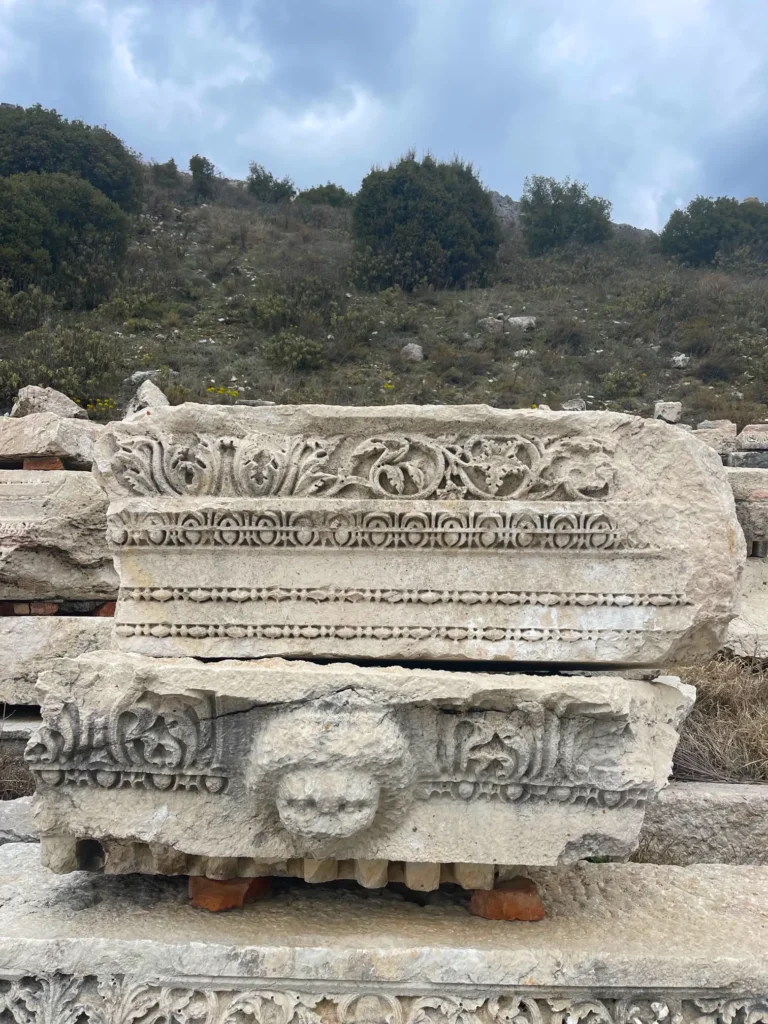
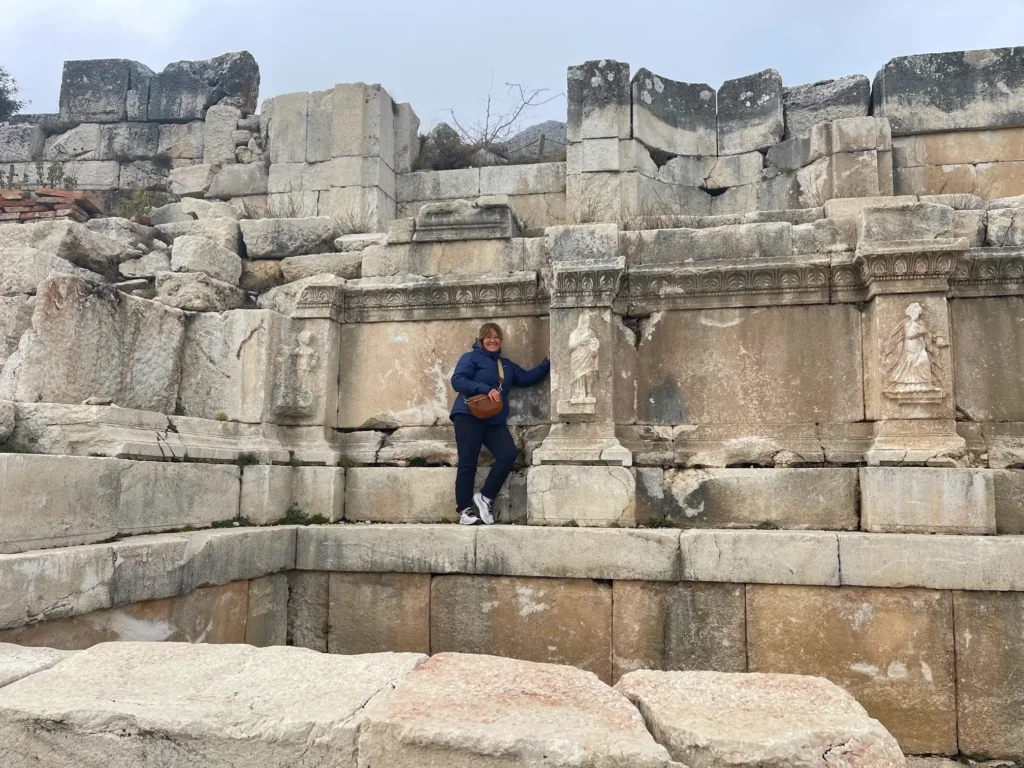
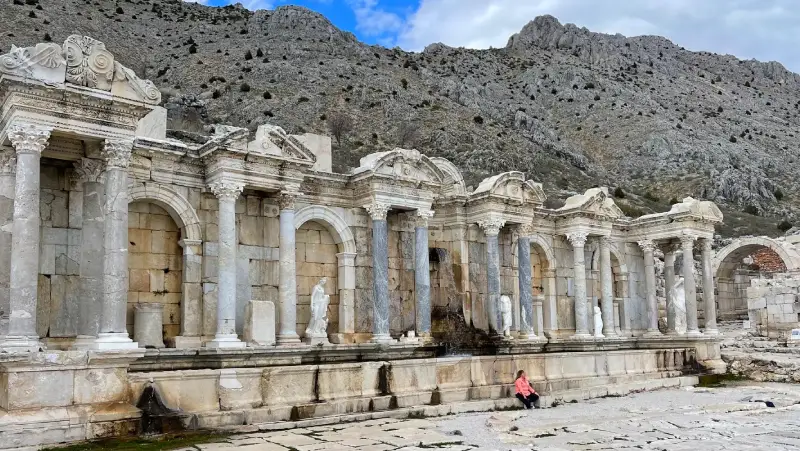
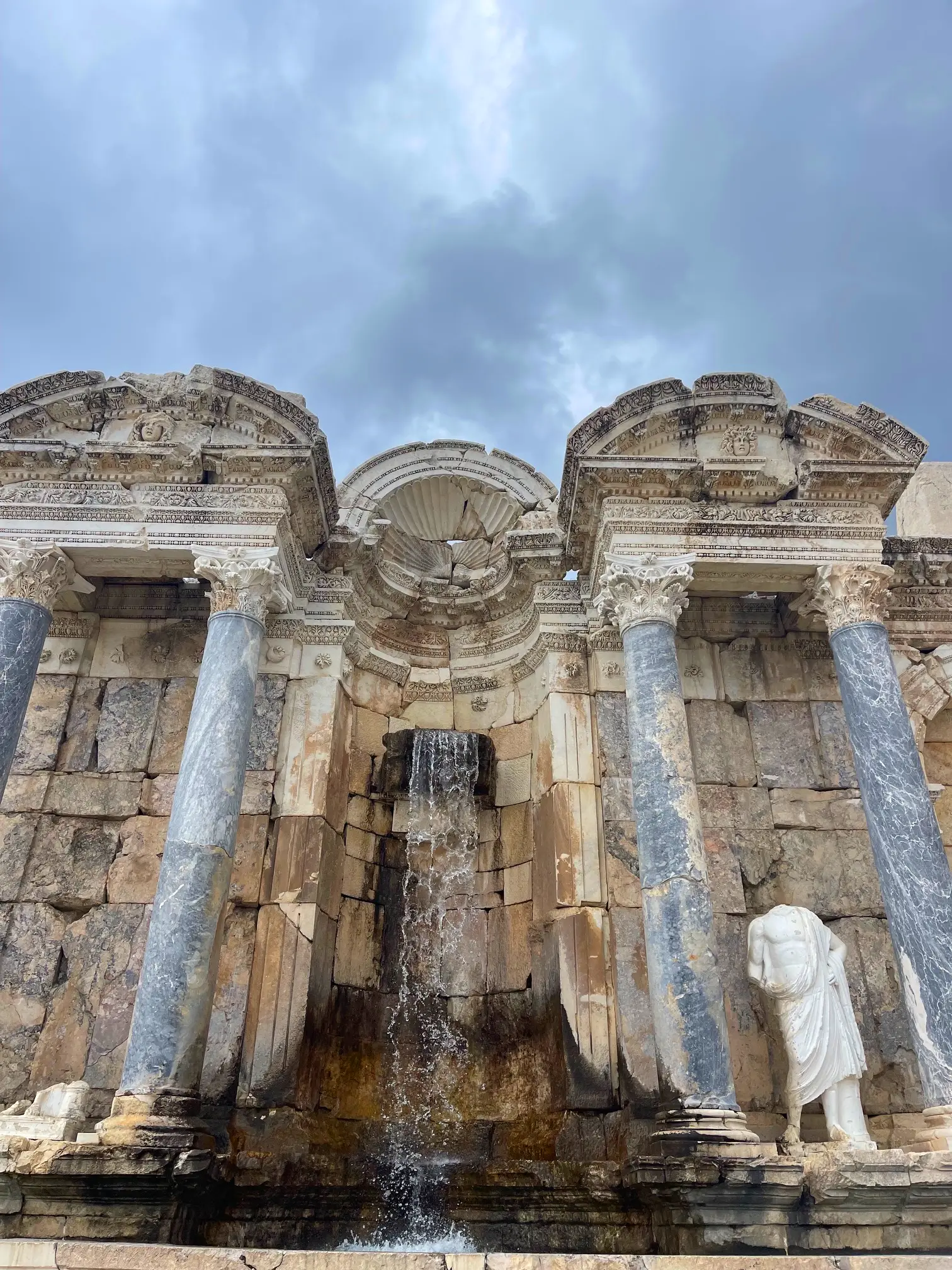
The residential buildings, baths, fountains, lime and metal furnaces, upper and lower agora, theater, library, council building, church, and temples that we see today are all evidence of this.
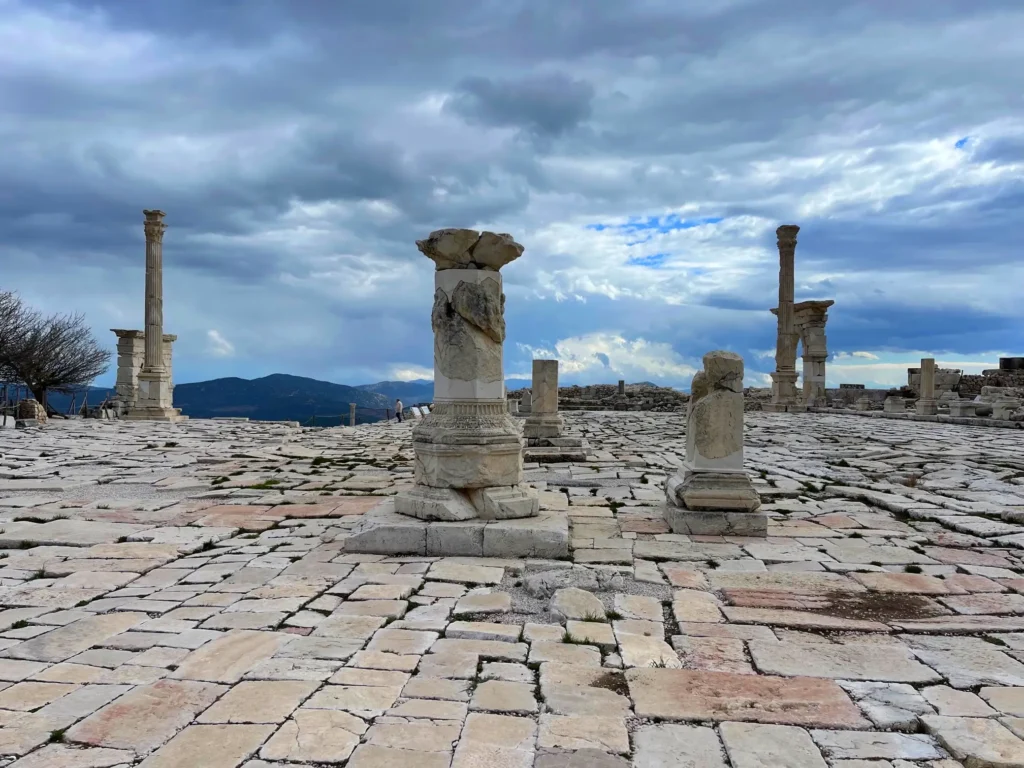
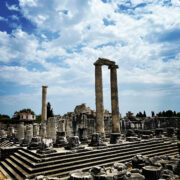
Emperor Hadrian also gave Sagalassos the title of “the first city of Pisidia, friend and ally of the Romans.” Consequently, a temple was started to be built for Emperor Hadrian in the city. This important monument, which reflects the reputation of the empire and Sagalassos, was built on a high hill to the south of the city so that it could be seen from everywhere. However, the temple was completed during the reign of Emperor Antoninus Pius (AD 138-161) after Hadrian’s death. The temple is one of the most meticulous structures in the city. It has a courtyard that is seventy meters long in front of it. The hill is surrounded by porticos. Archaeologists have found the inscription of the monument.
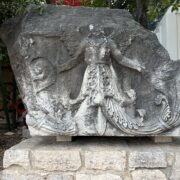
Every year, representatives from all the cities of Pisidia come to this temple to honor the emperor with offerings, participate in ceremonies and festivals, and take part in the ceremonial parade on the Pillar Street. The temple remained the center of these empire celebrations until the end of the 4th century AD. The wide courtyard of the temple is adorned with monuments and statues that honor emperors, priests, and winners of sports games in festivals.
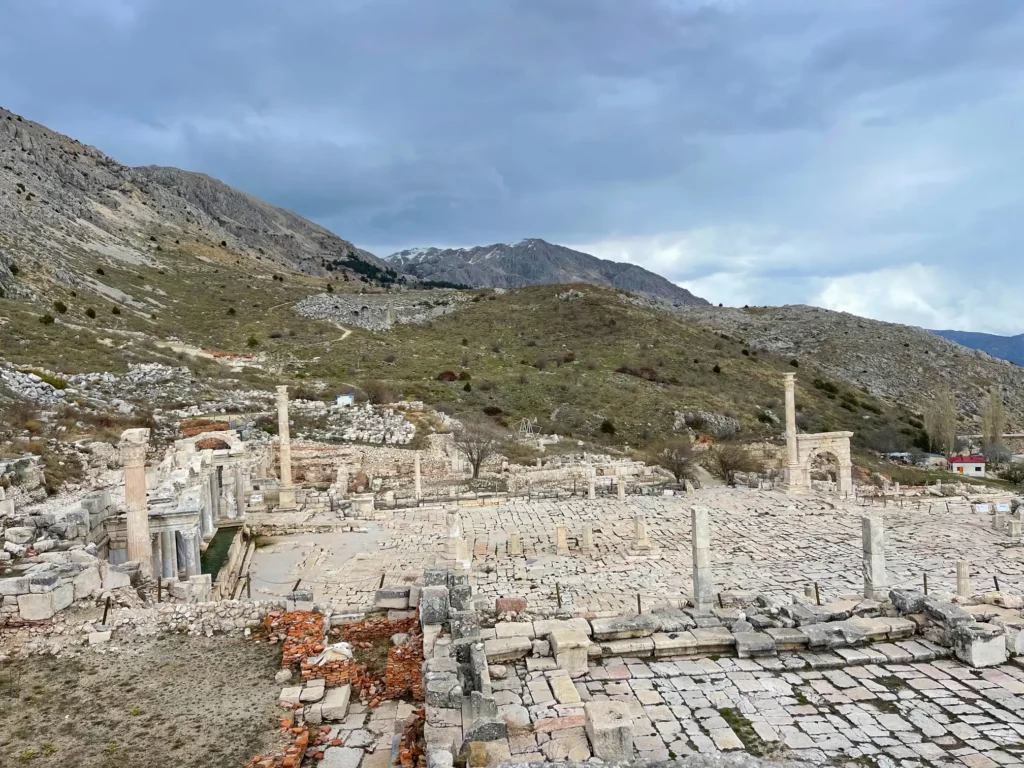
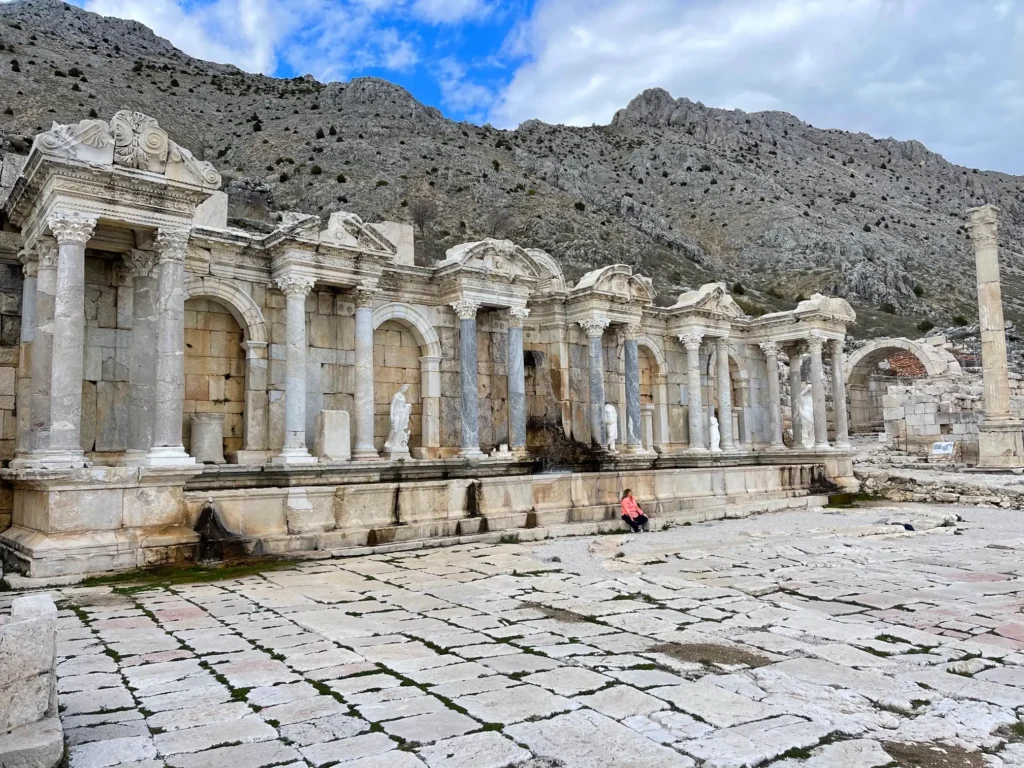
The small square in front of the Hadrian Fountain overlooks the lower parts of Sagalassos and the beautiful view of the valley. In front of it are the Lower Agora and the Pillar Street. At the end of the street, a little to the east, there is the Hadrian and Antoninus Pius Temple, and a little further ahead is Alexander’s Hill.
A little further to the southeast is the Düzen Tepe, which is a plateau that has a significant place in Sagalassos’s history. Until the 2nd century BC, the largest settlement in the area was located on the Düzen Tepe. Behind the hill rises the Zincirli Tepe, which has a peak of about 1800 meters and has been the acropolis of the Duzen Tepe plateau settlement.
The Sacred Area of the Roman Emperors on the other hand is located on a hill dominating the south of Sagalassos. This place is surrounded by colonnaded galleries in the Ionic architectural style. In the middle of the courtyard, there is a large temple built on a platform in the Corinthian architectural style. The entrance of the temple, which has 6 columns on its short sides and 11 columns on its long sides, also faces west. In ancient times, the courtyard was decorated with numerous honorary monuments.
During the abandonment periods of pagan beliefs, the temples belonging to the cult of the Roman emperors were also closed down along with other temples belonging to polytheistic religions. Later, this temple was partially dismantled, and various other buildings were built in the courtyard of the former sacred area.
After the earthquake that occurred in the 7th century AD in Sagalassos, a settlement surrounded by walls was established on this hill, and it became the new center of the city in the Byzantine period. The temple of the emperors became the home of the people.
The concept of the bath also has an important place in Sagalassos. The first bathhouse, which is a smaller building, was built in the 1st century AD. It consisted of three parallel, rectangular plan halls. From 120 AD onwards, a new and larger bathhouse called the gymnasium began to be built, following other examples in Anatolia.
Sagalassos was included in the UNESCO World Heritage Tentative List in 2009.